Weight Loss in Melbourne by Doctor Matthew Peverelle
Obesity is not due to a lack of willpower - it is a complex condition which requires a long-term solution.
Dr Peverelle has specialist expertise in providing the full spectrum of medical weight loss options:
Prescription tablets eg. Phentop
Injectables (eg. Ozempic, Mounjaro)
Non-surgical weight loss procedures
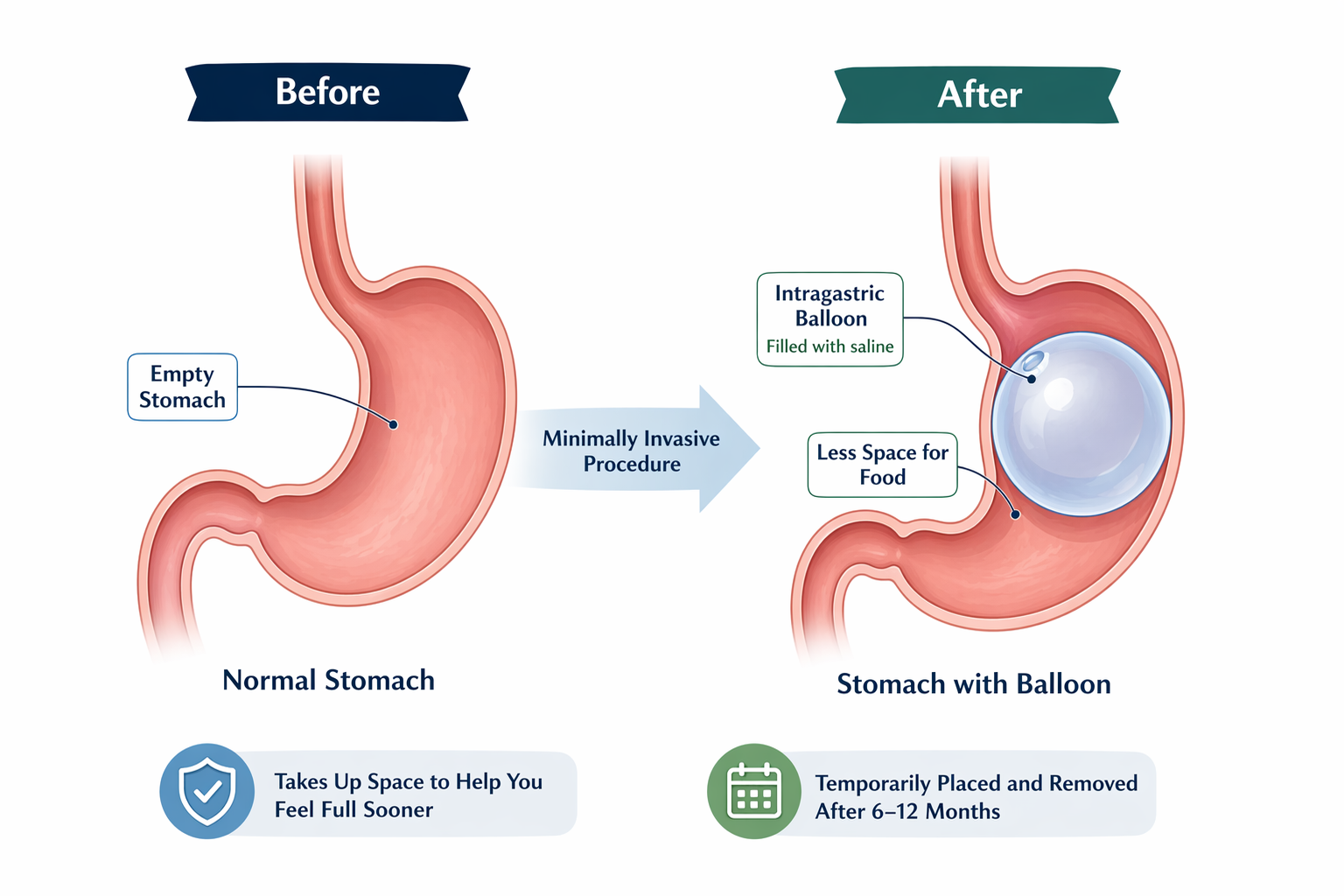
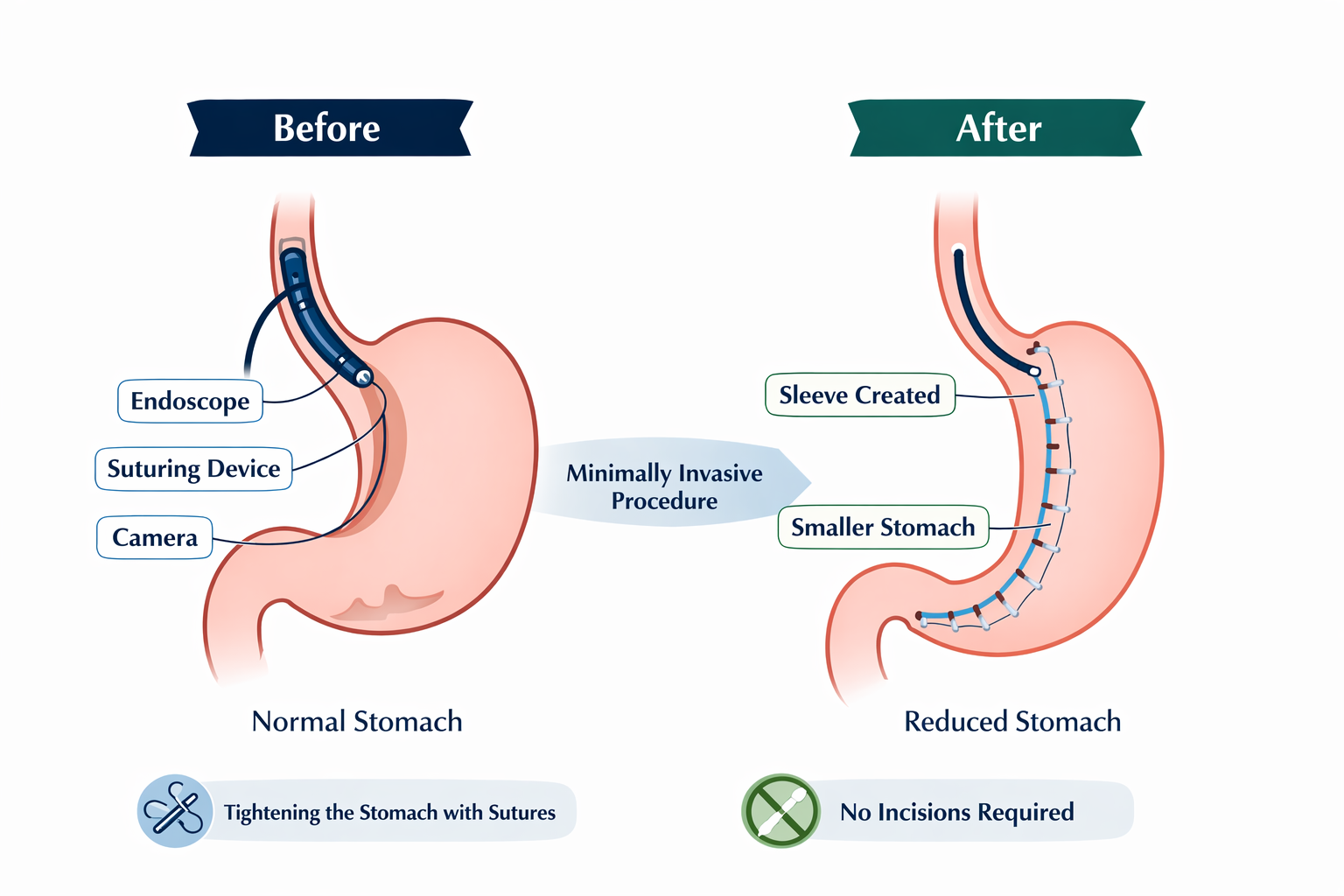
For those not wanting surgery, Dr Peverelle offers Intragastric Balloon placement (6 or 12 month options) or Endoscopic Sleeve Gastroplasty (ESG) — a non-surgical alternative to bariatric surgery.
Dr Peverelle is currently the only specialist in Melbourne trained and able to perform the ESG procedure, following further training undertaken in Sydney over 12 months. Taking a holistic approach, he addresses your obesity, metabolic health, gut function, and lifestyle, and helps you to build a personalised plan.
Non-surgical Weight Loss Procedures
Orbera
Intragastric Balloon
6-month programme
Pros
Cons
Spatz3
Adjustable Balloon
12-month adjustable programme
Pros
Cons
Endoscopic Sleeve
Gastroplasty (ESG)
Permanent endoscopic procedure
Pros
Cons
Before and After
Intragastric Balloon
Endoscopic Sleeve Gastroplasty (ESG)
Non-surgical Weight Loss Procedure Comparison
At a Glance| Feature | Orbera (6-month) | Spatz3 (12-month) | ESG |
|---|---|---|---|
| Duration | 6 months | 12 months | Permanent |
| Reversible | ✓ Yes | ✓ Yes | ~ Anatomy preserved, not reversed |
| Adjustable | X No | ✓ Yes | X No |
| Est. Total Weight Loss | 10–15% TWL | 14–18% TWL | 20–22% TWL |
| Anaesthetic | Sedation | Sedation | General anaesthetic |
| Hospital Admission | Day procedure | Day procedure | Day procedure |
| Recovery | 1–3 days | 1–3 days | 5–7 days |
| BMI Range | ≥30 | ≥30 | ≥30 |
| Combines with GLP-1 | ✓ Yes | ✓ Yes | ✓ Yes |
ESG - Your Questions Answered
-
ESG may be an option for adults who:
Have a body mass index (BMI) of 27-30 with another weight-related condition (eg. high blood pressure, cholesterol, fatty liver or diabetes), or a BMI greater than 30.
Have not had success with lifestyle modifications such as diet and exercise
Want a long-lasting solution to their weight
Are looking for an alternative to more invasive bariatric surgery
ESG can be part of a plan to reduce the risk of weight-related illness such as high blood pressure, diabetes, fatty liver disease, sleep apnea or heart disease. This procedure is especially effective when combined with exercise and dietary changes.
-
ESG is most effective when combined with a comprehensive lifestyle program, delivered in partnership with your doctor and allied health team. On average, patients lose approximately 20% of their total body weight following the procedure. Ultimately, the amount of weight you lose and maintain will depend on how closely you follow the advice of your doctor and allied health team.
-
The ESG takes place in an endoscopy suite while you are asleep under general anaesthesia. It lasts about 90 minutes.
The procedure is performed using an endoscope — a flexible tube with a light, camera and a suturing device attached. The tiny camera allows Dr Peverelle to see inside the stomach without making incisions in the abdomen.
Lines are drawn along the stomach’s front and back walls, where sutures will be placed.
Through the endoscope, approximately 3-5 sutures (stitches) are placed along the inside of the stomach.
The sutures are then tightened, drawing the front and back walls of the stomach together to reduce its volume by about 70%.
The sutures change the structure of the stomach, leaving it shaped like a tube or sleeve (hence the name sleeve gastroplasty). The sutures do not dissolve — your stomach tissue will heal around them to form the new shape. It is safe for the sutures to remain in your body.
With less volume in your stomach, you will feel fuller after eating less food, stay fuller for longer and lose weight.
-
Yes in general you will be asleep for the procedure. The anaesthetist will discuss the best form of sedation with you on the day.
-
Yes. The pre-op diet is a low calorie diet designed to shrink the volume of the liver by releasing stored carbohydrates (glucose), thereby making the procedure safer. It also helps to improve recovery time and prime the body for weight loss.
Following the ESG, appetite will be suppressed. A modified diet will need to be followed for the first 4 weeks to protect the sutures and allow the body’s natural healing process to take the load off the sutures.
-
Every medical procedure carries risk and the ESG is no different. The ESG has a 1% total risk of any major complication (bleeding, infection, suture breakdown).
-
ESG is a day procedure so you will go home the same day. Most people can return to their normal work and life duties after 2-3 days.
-
You can make an enquiry via the patient enquiry form, or by contacting The BMI Clinic directly on 1300 859 059.