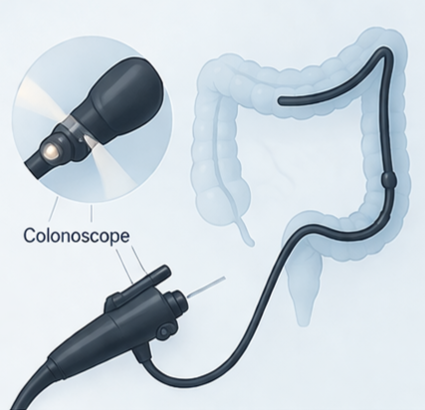
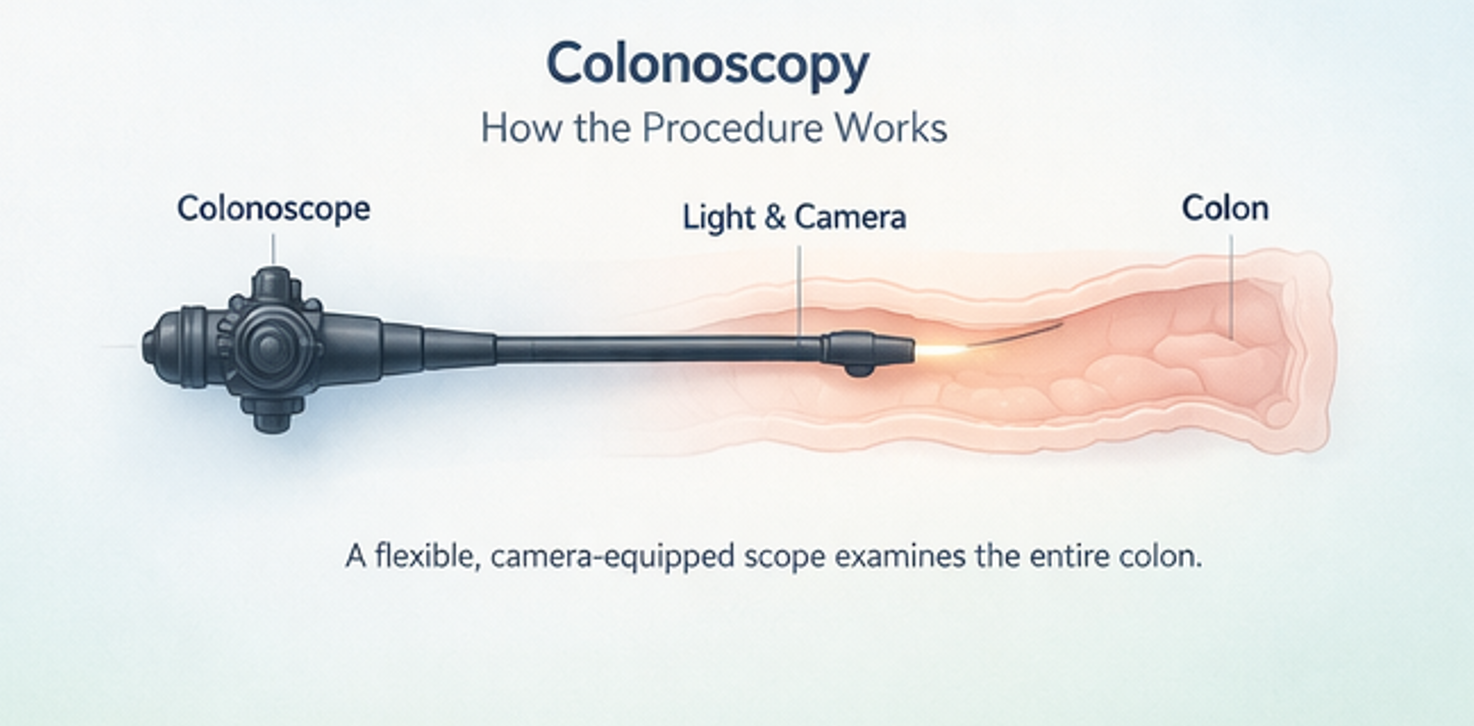
A colonoscopy is as simple 15-20 minute day procedure that allows Dr Peverelle to examine your large bowel (colon) and a part of the small bowel called the terminal ileum, while you are under light sedation (sleeping). It is considered the gold-standard for diagnosing and managing diseases including:
Polyps (benign but pre-cancerous growths)
Bowel cancer
Diverticulosis
Crohn’s disease
Ulcerative colitis
Instructions for a special diet and bowel preparation (liquid drinks) will be given to you prior to the procedure.
A colonoscopy is a very safe, routine procedure. Results of the procedure will be discussed with you on the day prior to being discharged.
Colonoscopy
Advanced Polyp Removal
Endoscopic Mucosal Resection (EMR)
Endoscopic Mucosal Resection (EMR) is an advanced polyp removal technique that is performed during colonoscopy for large polyps. Fluid is injected beneath the polyp to lift it from the bowel wall, providing a safer space for removal. Through the scope, a fine metal wire is then looped around the polyp and gently closed until the polyp detaches from the bowel wall. All removed tissue is collected and sent to the laboratory for analysis.
Endoscopic Sleeve Gastroplasty (ESG)
Endoscopic Sleeve Gastroplasty (ESG) is a minimally invasive, non-surgical procedure that places internal stitches via an endoscopy, reducing stomach volume and promote early fullness.
It offers an alternative to bariatric surgery with shorter recovery times and reduced discomfort. Patients are generally discharged the same day. Average weight loss after 12 months is 22% body weight, relatively equal to surgery.
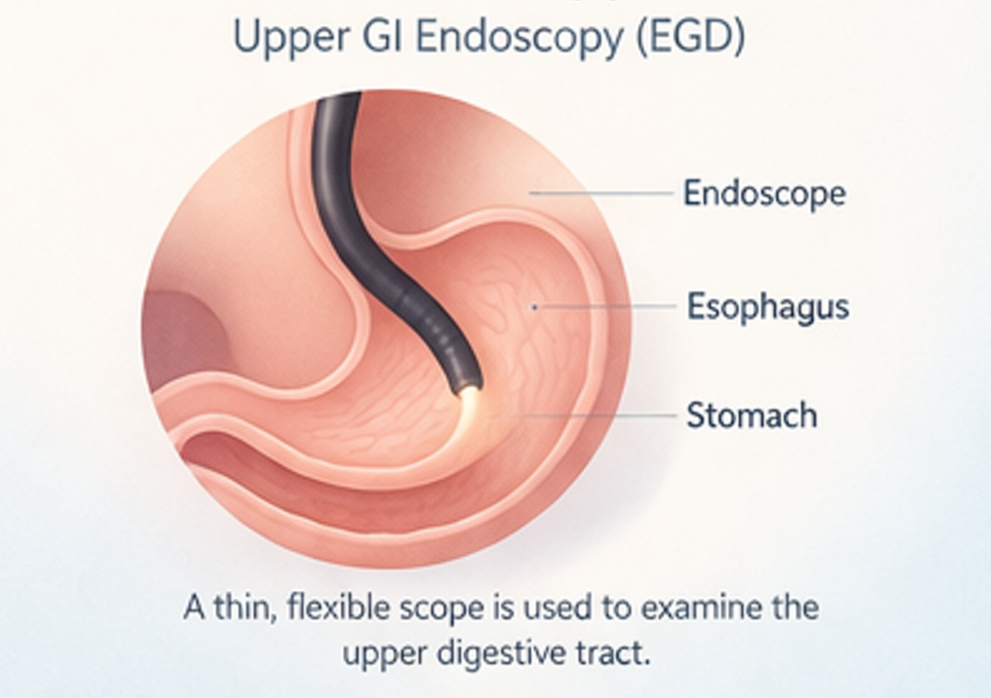
A gastroscopy is a simple 5-10 minute day procedure where Dr Peverelle will insert a thin flexible tube (the endoscope) into your mouth to examine the back of the throat, oesophagus, stomach and small bowel. This is done whilst you are lightly sedated (asleep).
Common conditions that a gastroscopy will investigate for include:
Barrett’s oesophagus
Gastritis (inflammation of the stomach)
Ulcers
Coeliac disease
Your results will be discussed with you prior to discharge. If biopsies (tissue samples) are obtained, they are typically processed and reviewed within 1–2 weeks.
Gastroscopy
Intragastric Balloon Insertion
The Intragastric Balloon is a simple, non-permanent weight-loss option that is easy to insert and remove. Insertion is performed by a simple 10 minute endoscopy or, in some cases, by swallowing a capsule.
The balloon remains in the stomach temporarily to support weight loss for up to 12 months. Removal is straightforward and also performed endoscopically. Median weight loss is 15-20% after 12 months, comparable to Ozempic and Mounjaro.